Showing posts with label Book. Show all posts

Friday, December 13, 2013

Self-Publishing: Debating the numbers.


A while ago I did a post on book sales from both traditionally published authors and self-published authors (or as I like to say Indie authors). Most of my figures a few years old, because the publishing industry isn't very forthcoming about its sales figures. 


Well, my friends, it seems like I’m not the only person who’s been wondering how Indie authors fair compared to their traditional counter parts.  Dana Beth Weinberg did a series of articles entitled The Self-Publishing Debate.  In the three parts she talks about all the usual issues: Why self-pub/traditional pub? How many titles do self-pub/Traditional/Hybrid authors publish? What kind of income do they make?

Her analysis is based on the 2013 Digital Book World and Writer’s Digest Author Survey; that surveyed 5,000 authors. Not nearly a complete look, but a nice sample.


Here are some of the highlights from her report:

About 19% of self-published authors in the sample also reported no annual income from their writing, compared to 6% of traditionally published authors and only 3% of hybrid authors.

(At the top earning, $200,000) less than one percent (0.6%) of self-published authors, 4.5% of traditionally published authors, and 6.7% of hybrid authors who reported on their income.

Self-published authors in the sample earned a median income in the range of $1 to $4,999, while traditionally published authors had a median writing income of $5,000 to $9,999, and hybrid authors earned a median income of $15,000 to $19,999.

Digital Book World’s analysis created a bit of a stir in the Indie publishing world. Especially when a colleague promoted her post on Forbes with the following title: How Much Money Do Self-Published Authors Make? And to answer that question he stated: In short, not much.


Indie authors from all over the web came out to cry foul.  What were their issues?  

Who they sampled for starters. Many active indie authors (who claim to be high earners) said they weren't asked take part in the survey despite being affiliated with Writer’s Digest. When you do informal surveys like this it’s hard to get a repressive data set. Is it likely they missed the mid-level and higher earners because they were busy working on their careers? Yes.

One comment mention that there was no distinction between new authors (with only a few books under their belt) and authors who've been publishing for years.  Time is an important factor in building an audience. So there’s a higher likelihood that the traditionally published/hybrid authors in the survey have an advantage over the indie authors because self-publishing is still in its infancy.

The other issue that I think is more than fair was broached by Hugh Howey. He complains that the survey is reading the data wrong. He argues:

But that compares ALL self-published authors and only a small fraction of people who go the traditional route. I've been hammering this point home for years, but it still gets left out of these comparisons. When you look at earnings and sales figures for traditionally published books, you have to take into account the huge percentage of books that never make it out of the slush pile. Why? Because those are authors and books attempting to go that route.


He makes a good point. Look at it this way.

If I've written a book and am trying to publish through the big five publishers, I spend my time submitting my work, tweaking it, and resubmitting it.  Sometimes for years. If my own writing contacts are indicative of this route then it’s likely these authors have several unpublished books waiting in the wings for a publisher to give them a golden ticket. None of these writers are counted on as traditionally published authors that have no income from their writing. Because the survey is looking at PUBLISHED writers.


BUT on the other spectrum. I write that same book, prepare it for self-publication, and despite my blood offerings to the gods of Indie authors, I don’t sell a single copy.  I’m counted in the survey as making no income on the book because I've published.

One of the main problems and greatest advantages to self-publishing is there are no gatekeepers.  No one stops you from publishing a book of poetry about your cat mittens. No one tells you that caveman erotica won’t sell. You can publish what you want (within the distributor’s guidelines).  


So Howey has a point. If we are counting the multitude of authors who self-publish (even when they shouldn't) why aren't we counting the publishing slush pile? 

Personally I like the landscape Howey paints for the self-publishing industry:

Even if you just guessed at the number of [traditionally] submitted manuscripts that make it to publication being at 1% (which I think is awfully generous), you would immediately see a completely different landscape. Take the top 1% of self-published books and compare their earnings with traditionally published books. That would be something to behold.

While I think he’s being a little too generous there, but he could be right. Amazon recently reported that 25% of their digital best sellers (top 100 kindle books) for last year were indie titles. That is something to behold!

Wednesday, December 4, 2013

#IWSG When Life Interrupts Your Writing


Purpose of IWSG : to share and encourage. Writers can express doubts and concerns without fear of appearing foolish or weak. Those who have been through the fire can offer assistance and guidance. It’s a safe haven for insecure writers of all kinds
To join IWSG visit Ninja Captain Alex J. Cavanaugh here

November is dead.  Long live December.


I can’t even begin to express how happy I am that November is over.  My day job and family drama have been a huge time suck this November. I expect some work crisis to crop up every now and then, but to couple that with my husband having a major falling out with his parents...It's just been a nightmare. (If you don't know I work for my in-laws. Yep, that makes for an awkward work day) And then my parents are having issues with my younger sister....

 So my grand plan to have my book edited and ready for beta readers by December 1st has failed miserably. I'm eager to finish and move on to my next project, but I can't eke out the time. When I do open my laptop I stare blankly at the screen, unmotivated. L


I have managed to get out ‘part one’, the first 14 chapters, edited and ready to read.  I'm looking forward to the feedback.  I've had readers throughout my process, and the feedback has been good from the people who participated in what I like to call “Gina’s Read-Along Book”.   My writing friends who've read chapters as I produced them, raw and filled with grammar errors, are the main reason I've made it to the other end of this process.  But this is the first time I’ll have someone read my work, start to finish.


It’s a little unnerving. This is the first full length novel I've written. Short stories and pieces for anthologies are so much easier to get feedback on.  I want people to be honest, but I also realize that asking someone to be a beta reader is a big commitments. I've come up with some guidelines.  A few things I’m looking for from my reads:
  1. Consistency.- I’m interested in VOICE consistency. I want to know that the voice stays strong throughout the novel.
  2. Where Would You Stop Reading? - I’m hoping no one comes to this, BUT if there IS a spot where you went: “Nope, I’m done!” Let me know where, and why.
  3. Parts you skipped: If there’s any part in the novel where you just skipped or skimmed b/c you felt the information was boring or repetitive please mark that.
  4. Plot holes. If you notice a plot issue let me know. I made some major changes at the end of the novel and had to edit the changes in the entire book. If things don’t sound right or people’s names (or jobs) change suddenly...

I’m hoping that people are honest. I don’t need my ego boosted. I've been writing long enough to have a thick skin. What I need is helpful feedback (even if it’s not what I want to hear). But like any author, I hope my readers like my book.  Now I just need to finish the last half and wait to hear what everyone has to say.  

I'll be posting the first chapter of the book on my blog. If you're interested in beta reading, shoot me an email. I'm always looking for a few good readers.

Monday, November 11, 2013

Urban Fantasy Isn't Just Leather Halters and Stilettos


We've been talking Genre at my writing group. We've had great discussions about Science Fiction, New Weird, Steam Punk...and this week we delve into Urban Fantasy.
Urban Fantasy seems to be the red headed step child of the SFF world. Which I find irritating.
 
Before you dismiss Urban Fantasy as JUST a fad (or worse, bad sex filled novels wrapped in werewolves and vampires) take a look at some of the books that fall under this category.
Urban Fantasy-A Sub-Genre of Fantasy.  Most often classified as a fantasy narrative in an Urban setting.  The best definition I’ve been able to find is:

John Clute and John Grant’s Encyclopedia of Fantasy (1997): “texts where fantasy and the mundane world interact, intersect, and interweave throughout a tale which is significantly about a real city”.
 
Most would argue the term Urban Fantasy applies to only contemporary fantasy novels.  Magic and fantastical creatures in our time, our world, but I’ve also seen the term UF applied to novels set in the past where an urban setting is a key factor.  Most notably the Steam Punk subgenre with books like the Parasol Protectorate series by Gail Carriger.

The other trend seen in today’s modern UF is the heavy noir mystery feel with a protagonist that's a PI, Detective, or other ‘law enforcement’.

History of Modern Urban Fantasy:
Charles de Lint is often credited as a pioneer of what we now call urban fantasy. His books draw heavily on mythology (Celtic sometimes Native American) but are set firmly in a modern city. The stories are told through modern eyes and modern perceptions.  His most popular books are the Newford stories, set in the collaborative Bordertown world.


Other defining authors in the genre:

Emma Bull (War for the Oaks), Neil Gaiman, Terri Windling (Editor of the collaborative anthology entitled Bordertown) Jim Butcher (Dresden Files), Ilona Andrews (Kate Daniels series); Kim Harrison (Rachel Morgan serie), Simon R. Green (Nightside books), Carrie Vaughn (Kitty Norville), and Laurell Hamilton (Anita Blake books)

(This is just a sample of notable authors from this popular genre...please don't email hate mail b/c I left off your favorite author)

One thing these novels have in common is they are all about fantasy and Fairytale retellings in the real cities. (Think elves in rock bands and cities bordering magical realms.)
 
Vampire novels became popular in the 90s following Anne Rice’s Interview with a vampire.


This novel would see a whole new host of vampire noire and romance novels that were marketed under the UF heading.  PN Elrod’s vampire detective series, Laurell Hamilton's Anita Blake novels, Charlain Harris’s Sothern Vampire Mysteries,   and YA romance novels like Twilight and The Vampire Academy.

The popularity of Laurell Hamilton’s Anita Blake novels in 1990s also began a new trend towards first person narrative with a “strong” female protagonist  who kickass in heels and leather.  These novels usually featured a grittier urban backdrop and more often than not, a romantic subplot.
This is when we began to see an over-all shift in plots for Urban Fantasy. Series like Laurell K Hamilton’s Anita Blake or Karen Marie Moning’s Darkfeverhttp://www.assoc-amazon.com/e/ir?t=tealceagh-20&l=as2&o=1&a=0440240980 stared to blur the lines b/w UF and romance…where the romantic subplots were to take center stage.  Tim Pratt even went so far to say that today’s Modern UF is filled with “books about tattooed women who wear black leather, fight crime, and fend off and/or sleep with supernatural monsters.” (He sites that as one of the reasons his publisher wanted him to publish his Marla Mason books under the name TA Pratt. His publisher has since dropped the series and he continues to self publish it.)


There's nothing wrong with including these book under the Urban fantasy umbrella, but this narrowing of the definition of UF leaves out a whole host of books that should fall into this genre.

It also makes the public believe UF is a fad or ‘New’ Genre, but in fact we’ve had these types of tales for years.

UF has wide, varied, and deep influences.  The real heart of UF is all about making old stories modern. Bringing the fantastical to our mundane lives.

The early gothic novels can easily fall under the umbrella of urban fantasy.  Arthur Machen’s The Great God Pan (1890) could be classified as UF (A young girl has her mind opened to the world of gods and monsters, producing an offspring that terrorizes Victorian London) While classified as Horror at the time, The Great God Pan has all the trademarks of UF.  Urban setting, fantastical creatures, mystery, set in modern London.


Carrie Vaughn points out that Jack Williamson’s Darker Than You Think, a lycanthropy story, originally published in 1940, would fit well in today’s UF marketplace.  It has werewolves, a terrible destiny, and, of course, a dangerous romance.

Even if you keep to a very narrow definition of UF (city setting, modern story, mystery) many of the Victorian and pre-Victorian gothic tale could be classified as UF. 

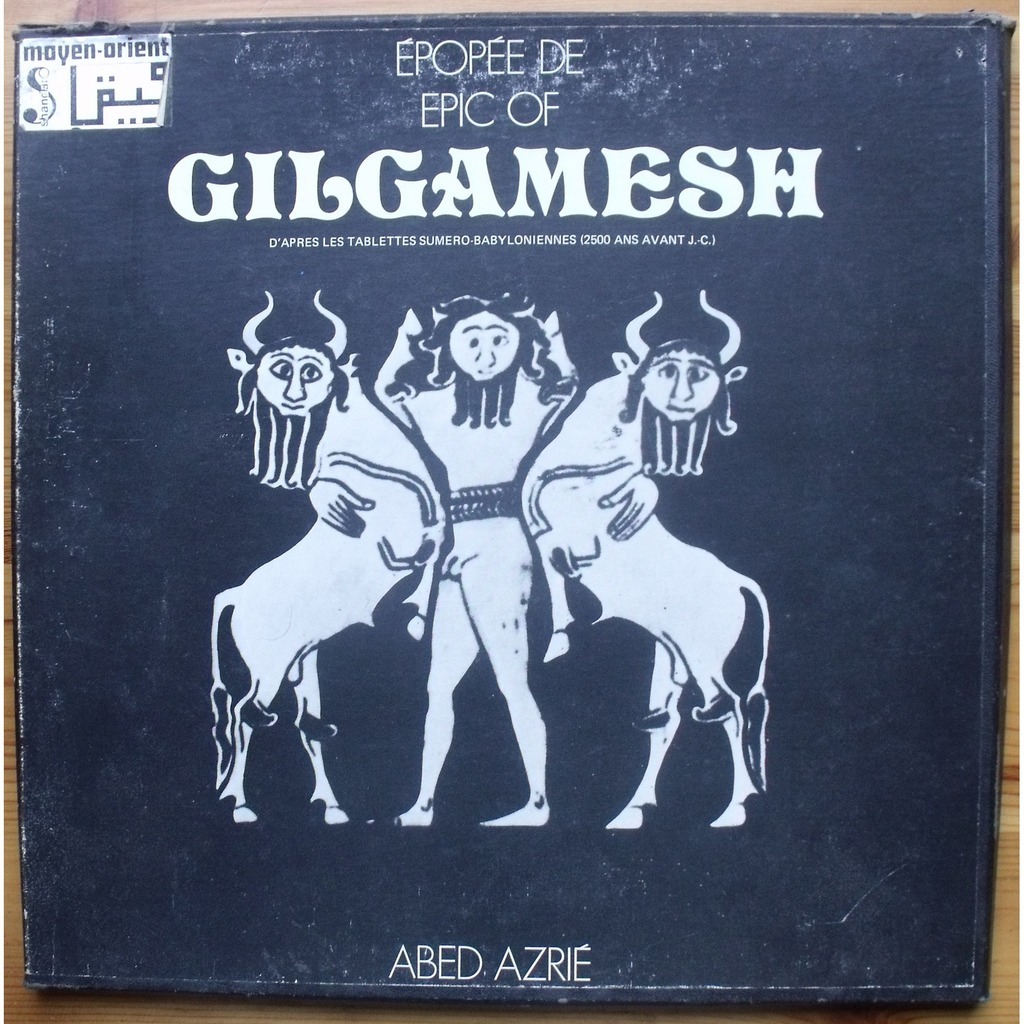
But don’t stop there, further back Gilgamesh's fantastic adventures happened in the Sumerians' mundane world, not in some magical alternate universe.


So before you dismiss UF as just a passing trend, remember this genre has a long history and will likely be around for years to come.   

Wednesday, October 30, 2013

The End is Near!

I can see it. THE END!!!


Like a Boss!
So, no time to talk. I'll leave you with my G+ post:


Friday, October 18, 2013

Publishing Industry Facts That Will Make You Think

I've been MIA for longer than intended, but it's a good thing.  I've been busy writing. The finish line for Lotus Petals is in sight!!!

This week I was asked to host a discussion about self publishing and small press publishing for my writers group.  I've spent the week researching and putting together information and I wanted to share with my readers. :)  This will be a multipart post (I went overboard on the research!!)


THE HEALTH OF THE PUBLISHING INDUSTRY:

Despite the go-go of our society and the multitude of entertainment options we have today, PEOPLE ARE STILL READING, but how they are reading is changing.


Sales of hardcovers rose 1.3% in the year, to $5.06 billion, and trade paperback sales increased slightly, up 0.4%, to $4.96 billion. . . . Total e-book sales rose 44.2% in 2012, to $3.04 billion and accounted for 20% of trade revenue and sales of downloadable audio rose 21.8% in 2012, to $240.7 million. (figures from Book stats)

The number of traditionally published print books rose 6% in 2011, to 347,178, according to preliminary figures released by Bowker.  This was the first year they included self-published titles in the 'traditionally published' column , and they believe this was the driving factor to the increase.

Bowker goes on to say that the number of self-published books has tripled in growth, especially in ebooks.  They tally more than 235,000 new print and ebooks in 2011. This can easily be contributed to new technology that makes self-publishing so easy.  And the news of self-published authors 'making it big'. Even with the superstars of self published books being heralded as modern day folk heroes of the publishing industry, individual self published books usually don't do well.

According to the New York Times: “most self-published books sell fewer than 100 or 150 copies", many authors and self-publishing company executives say.


There are breakout successes, to be sure, and some writers can make money simply by selling their e-books at low prices. Some self-published books attract so much attention that a traditional publishing house eventually picks them up. But It's not an easy path to follow, you have to be an entrepreneur if you're planning to self publish.

"So I'm going to push hard to get a publishing contract," You say. "That way I'll be successful in selling my book!"


Well not so fast. Publishing contracts don't guarantee success.  As a matter of fact, MOST BOOKS don't do well regardless of who or how they are published.
"Here's the reality of the book industry: in 2004, 950,000 titles out of the 1.2 million tracked by Nielsen Bookscan* sold fewer than 99 copies. Another 200,000 sold fewer than 1,000 copies. Only 25,000 sold more than 5,000 copies. The average book in America sells about 500 copies. Those blockbusters are a minute anomaly: only 10 books sold more than a million copies last year, and fewer than 500 sold more than 100,000.(Publishers Weekly, July 17, 2006). 

And Nonfiction fairs even worse. According to BookScan*, which tracks most bookstore, online, and other retail sales of books, only 299 million books were sold in 2008 in the U.S. in all adult nonfiction categories combined. The average U.S. book is now [2011] selling less than 250 copies per year and less than 3,000 copies over its lifetime.
*A note about bookscan. They only track books with ISBN numbers. A lot of Digital only self-published novels are forgoing the expense of ISBN, and there’s no data on their sales from the industry.

LET ME STRESS THAT:
 500 COPIES PER YEAR!

 
Which means for every book that sells over a million copies there are thousands that are complete flops.

Yes, these aren't the most current statistics, but sales figures on individual books are guarded. The publishing houses don't talk about it. Published authors, who are ordinarily helpful and supportive of new writers, guard their numbers and don't talk shop. Agents are closed lipped about it.

Smashwords, a self-publishing website has been fairly open about individual book sales. “We make it clear to our authors.” That a huge majority of self-published books “don’t sell a lot of copies,” said Mark Coker, the founder and chief executive of Smashwords, a no-frills operation that concentrates on self-published e-books.


This graph represents Smashword books only.


 THE DIGITAL DIVED: Will Digital books save the publishing industry?


E-book sales have increase dramatically. Looking from January 2011 to January 2012, the increase was 49.5% for adult books and 475.1% for children and YA books. One analyst from Simba Information estimated that 1 in every 5 adults is reading e-books on a digital device.

Book Sales (as of second quarter 2012)
30% Trade Paperback
27% Hardcover
22% E-book
12% Mass-market
7% Other bindings
2% Audio Book

Pricewaterhouse Cooper projects that by 2016, e-books will make up 50% of the U.S. book market, and that physical book sales will hold steady with only slight percentage increases from year to year.

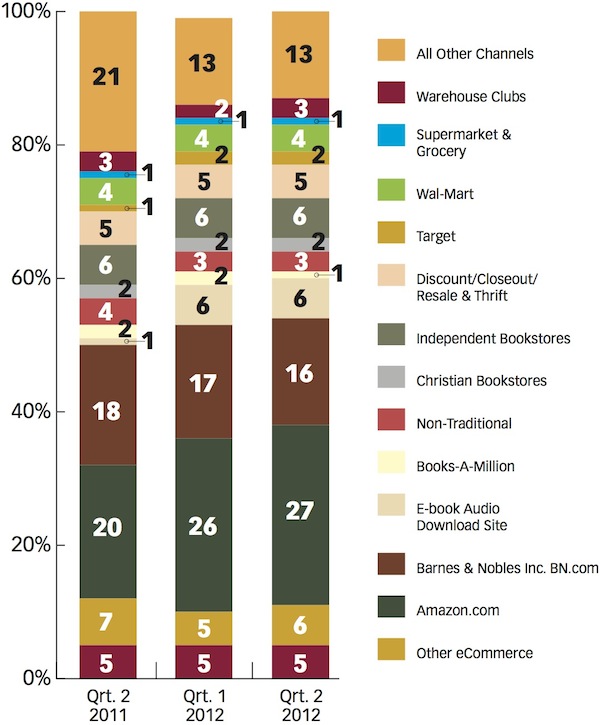
Market Share of Book Sales (as of second quarter 2012)
27% Amazon
16% Barnes & Noble and B&N.com
6% Audio E-book websites
6% Other E-commerce
6% Independent Bookstores
5% Resale and Thrift
4% Walmart
3% Warehouse Clubs
2% Target
1% Books-a-million
1% Supermarket and Grocery
13% All Other Channels

E-book Sales (as of second quarter 2012)
62% Amazon
22% Barnes and Noble
10% Apple
2% Sony
1% Kobo
~3% Google and others

The publishing industry isn't blind to these statistics. A Digital Book World survey found that at the end of 2011, 82% of publishing executives surveyed were optimistic about the transition to digital formats and 54% projected the decline of sales for printed books.

So with the ease of self publishing and the demand for digital books rising, the next ten years will be an exciting ride in the publishing industry.

Tune in for part two where I muse on how an author can possible making money in this brave new world of publishing.


Wednesday, October 2, 2013

What's Up Wednesday 10/02/13

 
“What’s Up Wednesday” is a weekly blog hop by Jaime Morrow and Erin Funk. From Jaime: It’s similar in some respects to the Currently… post, but it’s been whittled down to only four headings to make it quicker and more manageable on a weekly basis. Be sure to visit Jaime's blog to add your post to the link list!


What I'm Reading


I've been staying with Contemporary Romance this week.  I finished two books in the new series: The Science of Temptation. 
The Theory of Attraction and The Seduction Hypothesis by Delphine Dryden.  They were fun erotic romances with nontraditional characters.  Mix in a little Big Bang Theory with BDSM and you get the picture.  I love that the male love interest was a social awkward dominant...you have to read to understand.  The second one was set a Con.  I love me some nerds :)

Right now I'm reading Rebound Girl by Tamara Morgan. Again another story with nontraditional leads.  The Female protagonist is independent to a fault (comes of arrogant and bitchy at times) and the Male love interest is a nice guy...a really nice guy (he teaches kindergarten!!!).  I'm enjoying the book.  Morgan has really great timing and a lot of humor.  I already have the next book Derby Girl ready to read.

ABSOLUTLY LOVE THE COVER!!!

 
  What I'm Writing

Novel: I've been keeping up with my word count so that's great but I don't think I'm going to make my mid October deadline.  I've decided to add a bunch to the story and change some of the charcters.  While I'm NOT doing that now, just making notes, the ending isn't going to match up with the start of the novel, so I'm going to have to go back to the start add at least two chapters and fiddle with the time line a tad.  So, while I might have an ending by the Middle of October....It won't be a finished first draft :(

What Else I've Been Up To

Work.  Work has be a huge time suck on me right now.  I've been spending my days arguing with some insurance companies...enough to send me on a murderous spree.  Luckily I have lots of liquor at home to keep me in check!!!

What Inspires Me Right Now

My son!!!


 This was part of his testing for his first degree black belt.  One of the skills he had to do was a flying side kick.  He worked really hard to be ready for his test and passed!!!  He is all kinds of awesome!

I've been swamped and don't have much else to say.
So that's what's been up with me this week.  How has your week been?


Tuesday, September 24, 2013

Audiobooks on the cheap?

I’m an audiobook devote. I work with numbers most of the day, so I can easily put in headphones and process medical claims and balance the bank accounts, all while listening to a book.

I like to read…and do feel audiobooks give you a different experience, but love being about to transport myself to a different place while I’m doing mundane things like bookkeeping, driving or doing the dishes.

 
There’s two major downfalls to audio books…
The first is narration. Sometimes a narration can ruin a book.  If a narrator changes in the middle of a series it can ruin the book for you (Ghost Story…I missed you Marsters L you can narrate for me any day, just saying.)
The other is Price.  Audiobooks are just as expensive as hard back books.  Going for $23 to $30 or more.  Even with a subscription to audible you’re still looking at $14 to $13 dollars a book, and this can be hard to justify when you can get a lot of ebook now for $6.99 or cheaper. (even the popular authors are around $9.99)

Amazon has been doing this Whisper-Sync for a while now.  Get the ebook with the audio and you can pick up right where the narration left off, or right were you stopped reading.  Have to go get the kids…no problem just pop in the earphones and you don’t have to leave you book behind/
Well last night I discovered something odd.  For some books it’s actually cheaper to get the ebook AND the audio book together.
Amazon is encouraging you to get the audiobook when you by the kindle version by discounting it.  A LOT!

TIME FOR MATH!!

Let’s look at Wool by Hugh Howey.
 

The Audiobook is $29.95. If you have a membership it’s $20.96. 
You save $8.99

But wait I want to use my credits.  A gold membership credit cost $14.95. 
You save $15.00.  Membership pays…
Let’s look at the new deal with Amazon. I can buy Howey’s Ebook for $5.99 and if at time of purchase I ADD ON the Audiobook it’s only $1.99.  So I get both for $7.98. 
You save $21.97 and $6.97 over the cost of a credit.
Not every book is like this.  And this doesn't work for every book, but for most you can get both book for less then the $14.95 credit cost.

You need to look for the tag on the audible page:
·         Whispersync for Voice

Listen to Edge of Shadows, then pick up right where you left off with the Kindle book, available from Amazon.com for $4.99. Learn more

Get this Audiobook for the reduced price of $1.99, when you buy the Kindle edition first.

So if you want to try out Audible.  This might be a way to give it a try.

Wednesday, September 11, 2013

What's up Wednesday 09/11/13

“What’s Up Wednesday” is a weekly blog hop by Jaime Morrow and Erin Funk. From Jaime: It’s similar in some respects to the Currently… post, but it’s been whittled down to only four headings to make it quicker and more manageable on a weekly basis. Be sure to visit Jaime's blog to add your post to the link list!


What I'm Reading

Bonds of Hope showed up on my kindle last night J so of course I started it. I had just finished with listening to the audio of World War Z and was preparing to start with my writing… but my new book was calling to me.

I started it, but I am putting down my foot (figuratively).  I’ve told myself I’m only reading during bed time.  I really have to get back on a regular writing schedule if I’m going to finish my draft.

What I'm Writing

Blogging:  Trying hard to catch up on my blogging, and I think I’m making some head way.  I have a couple guest blog requests that I think I might have to put on the back burner for now if I’m going to stay on task.

Novel: So after making my bold declaration last week (I will finish my first draft by October…) I haven’t written a thing.  I crammed to finish my critique for my writing group and then fell into reading.  “Just one more book” I kept telling myself.  Well tonight is our weekly write-in and I’m determined to get some work done.  I have about 8 chapters left to write and if I’m going to pump that out in 6 or so weeks I have to really sit down each night and hit my 1000 words a night goal.  I don’t think it’s outside my ability… with a little help from my friends. (I’m think of you Kate!!)


What Else I've Been Up To

This weekend we had a wedding.  It’s always fun to see people in love start their lives together. Outside of that we’ve had the normal family drama. 

This month has been big for family stress.  I’ve had to deal with the In-laws totally enable the brother-in-law and his continued worthlessness (and I don’t use that word lightly).  It’s frustrating and infuriating.  I could easily overlook it, except this all revolves around our family business. 

Hubby is preparing to start Grad school; a big part of the stresser for the family issues.  We’re still not sure if Grad school is going to require him to go down to part time, and if so we need to make up his salary by increasing mine.

What Inspires Me Right Now

0_o

I think that’s my issue.  I’ve been really uninspired this last week.  Work stress has encouraged me to hid in my books at night.  I’ve stayed off the social media sites and even off my nightly hangout with my writing buddies.

I need to find my spark again. Maybe I need a swift kick to get me going again.

 
So that's what's been up with me this week.  How has your week been?


Wednesday, August 7, 2013

Quickie Book Review Geekomancy

Quickie Review...


Unfortunately I didn't finish Geekomancy. I should have loved it. I wanted to love it. It's cheeky and geeky. It's filled with all the random references that I love, but I found it to be too cliche. There is a lot for fellow geeks to love in the book, but I found the everything and the kitchen sink approach too much to handle. Once the author mentioned Firefly getting canceled I started to feel like he was working off a list of geek trivia and wanted to see how much he could add in a single book/chapter...heck sentence.

I'm going to give it another try...some time later, but for now I have to say I'm not feeling the love.

Wednesday, July 24, 2013

Serials: When Good Stories Don't End.

As I’ve said before I’m an avid reader; have been most of my life.  I read constantly, and there are always books waiting for me when I’m done.  I read across genres and mediums.  This of course doesn’t make me an expert, but I do have very strong opinions on what I like and don’t like.  This post will be the first in a series where I talk directly to those of you writing…not as a writer myself, but as a reader.


Today’s topic:  The End…WTF, it’s not over.  Series and serials.


I love a series.  If the writing is good or the characters and the world are compelling I’m hooked.  I have followed series to their natural end, and have even roughed through some that should have ended books earlier.  But I’ve noticed a trend, at least in the romance and YA genres, which really pisses me off:  Serials billed as Series.

So what’s the difference?


In literature, a serial is a publishing format by which a single large work, most often a work of narrative fiction, is presented in contiguous (typically chronological) installments -Wikipedia

A book series is a sequence of books having certain characteristics in common that are formally identified together as a group. -Wikipedia

Series will often have a continuing plot and characters that are present in all of the books, building up to a thrilling (hopefully) conclusion.  Serials are the continuation of the same story through a number of books.  It might be a small distinction, but it’s crucial to me.
 

I want my stories to end.  I need that satisfying “aha” at the end of a novel.  The non-endings of serials are incredibly frustrating to me, especially when I don’t see them coming.  I’ve hopped out of my bed at two in the morning livid at an author for essentially telling me “…to be continued.” , instead of “The End.”  This is the fastest way to get me to tell my friends, “don’t read that book, you’ll be disappointed.”

I realize the draw of serials for publishers and author; they can draw in readers and create a fan base that will follow you from book one to five to twenty five, but know your definition before you bill your story as a series.  If you’re book ends without a climax, but instead has a ‘hook’ then you’re writing a serial.

I crave the rise and fall of traditional storytelling.  Don’t get me wrong.  I love a continuing mystery in a series a thread that works its way through the stories, but each novel needs to have its own story, its own mystery, its own rise and fall.    Without this,  all you have is a extraordinarily long novel that would put George RR Martin to shame. 

So tell me a story.  Give me a start and an0 ending.  Don’t leave me hanging!!


Gina Drayer

Wednesday, June 5, 2013

Gender, POV, and Sex in SciFi/Fantasy.

I've been having this discussion with some of my fellow writers.  Fantasy and SciFi have a heavy male readership.  Male or Female POV matters a little, and is easily overlooked....But when you throw in sex, suddenly if it's a female POV, they want to plug your story into the pararomance section.

Wanting to keep as much of my male audience, while still telling an authentic story...I've been going back and forth on how much sex to put in my book.  Because my MC is female I worry about men not wanting to read (and have some evidence from the male beta readers)

So what is it about 1st person female POV and sex scenes that turns men off?   Is it the descriptive writing...describing what the man is doing to 'me' (1POV)
or
Is it the fear that once we introduce sex that the book will rattle on about angst-y love feelings and menses?

Mike Licht, NotionsCapital.com

It's not like men haven't sexualize women in Science Fiction and Fantasy for years.  So what's the rub?


I found this blog post (and the one early) particularly eye opening on author gender and Reviews in general.
http://radishreviews.com/2013/05/01/over-the-borderline-more-genre-gender-reviews/

Women writers of speculative fiction find themselves open to accusations of writing too much about feelings and having too much romance–and that these things are actively detrimental to speculative fiction (why is this? and “I don’t like it” is not an acceptable answer; there’s lots of stuff I don’t like and I wouldn’t necessarily call it detrimental to an entire genre). I’ve seen this in reviews of books by women–books where, if the author were a man (or if they simply appear to be male), the romantic plot would have been described as “nuanced” and possibly also as “subtle” or “sublime”–but since the book was written by a woman, the fact that there’s a romantic plot is suddenly a flaw.

Furthermore...I have a new hero!
http://geekerella.com/on-the-non-existent-lack-of-katniss-everdeens-in-adult-fiction/

Then let’s say that. Let’s say “I don’t really like reading sex scenes” instead of saying “Urban fantasy is not a good example of strong female characters because they’re having too many damn orgasms.”
 I'm not necessarily saying a good UF needs to have or not have sex.  But it also doesn't mean that the main characters should be celibate.  Most UF is current fiction, right now, and let's face it... sex is a big part of our lives, whether we're getting any or not.  It's in movies, on TV and in our magazines.  Not to have our characters talk about and think about sex is unrealistic.